
When someone is sick, in pain, or unsure about what is happening inside their body, doctors often need more than just a physical checkup. They need a clear picture of what is happening deep inside the organs, tissues, or bones. This is where diagnostic imaging becomes important. Almost every person, at some point in life, …


When someone is sick, in pain, or unsure about what is happening inside their body, doctors often need more than just a physical checkup. They need a clear picture of what is happening deep inside the organs, tissues, or bones.
This is where diagnostic imaging becomes important. Almost every person, at some point in life, will need a scan such as an ultrasound, X-ray, MRI, CT scan, or mammogram. So when people search online for “diagnostic imaging near me,” they are doing more than looking for a clinic. They are looking for safety, accuracy, comfort, trust, and answers.
Choosing the right imaging center can make a huge difference in your healthcare journey. Many centers advertise advanced machines and fast reports, but not all centers offer the same level of care.
This article explains what diagnostic imaging means, why you need it and how to choose the best place for yourself or a loved one. The goal is to make things simple, clear, and useful so you can make a confident decision.
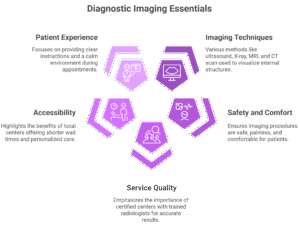
What Is Diagnostic Imaging and Why Is It Important?
Diagnostic imaging means taking pictures of the inside of the body. These pictures help doctors understand why a person has pain, swelling, bleeding, lump, infection, breathing problems, pregnancy concerns, or other health issues. Without imaging, doctors might have to guess, and that can delay treatment. With imaging, doctors can see what is happening quickly and accurately.
Diagnostic imaging is very important because many serious medical problems are invisible to the eye. A person might look healthy from the outside but could have internal bleeding, a tumor, an organ issue, a bone fracture, or a pregnancy complication. Imaging makes it possible to detect such conditions early. Early detection leads to early treatment, and early treatment leads to better recovery.
People often worry that imaging might be unsafe, painful or scary. But in reality, most imaging tests are simple, safe and painless. For example, ultrasound uses sound waves instead of radiation, so it is gentle and suitable even for unborn babies. X-rays and CT scans use radiation, but only in small amounts and only when truly necessary. MRI uses magnets and is also safe, though it takes longer and requires a person to lie still. Every test has a purpose and doctors choose the safest and most effective one for each situation.
How Does Diagnostic Imaging Work?
The way diagnostic imaging works depends on the type of machine being used. However, the purpose is always the same: to produce clear pictures that help doctors understand what is happening inside the body. For example, ultrasound machines send sound waves into the body and the waves bounce back to create a picture on a screen. X-rays pass through the body and show details of bones and lungs. MRI uses magnets and radio waves to show soft tissues, like muscles and the brain. CT scans take many X-ray images and combine them to create a 3D picture of the internal organs.
The person having the scan usually lies on a table or bed. A trained imaging technician gently positions the body so the picture will be clear. Some tests take only five minutes; others may take up to an hour. Most of the time, you do not feel anything during the scan. You may hear some sounds depending on the machine, but the process is generally calm and comfortable.
When Do Doctors Recommend Diagnostic Medical Imaging?
Doctors recommend diagnostic medical imaging when they need more information about a medical problem. This may be because the patient has unexplained pain, dizziness, stomach issues, injury from an accident or symptoms that could point to a condition like infection or organ damage. Imaging is also used to monitor long-term issues like pregnancy, heart disease, cancer treatment progress or bone weakening.
Sometimes, people ask if imaging is really necessary. In almost all cases, the answer is yes if the doctor has recommended it. Imaging provides information that blood tests and physical exams cannot. It also prevents unnecessary surgery by showing what is happening inside without opening the body. The main purpose of imaging is to protect patients by finding the right solution as early as possible.
What Types of Diagnostic Imaging Services Should I Know About?
Only this heading contains bullet points (as requested).
Common diagnostic imaging services include:
- Ultrasound – Safe for pregnancy, soft tissue scans, abdominal pain and organ checks.
- X-ray – Best for bones, chest images and lung infections.
- MRI – Shows muscles, brain and joints in clear detail.
- CT Scan – Fast 3D images of organs after trauma or injury.
- Mammogram – Special imaging for breast health and cancer screening.
- Bone Density Scan – Checks bone strength and risk of fractures.
How Do I Choose the Right Diagnostic Imaging Center Near Me?
Not all imaging centers provide the same quality of service. When picking a diagnostic imaging center, you are not just choosing a place to get a scan—you are choosing accuracy, safety and peace of mind. A good center combines modern equipment with skilled professionals who know how to use it perfectly.
Start by checking if the center is certified and licensed. This ensures the machines are maintained, radiation safety rules are followed and technicians are trained. Next, check if the center has experienced radiologists who read and interpret images. Even the best machines mean nothing if the results are not properly understood. You should also look for centers that send results quickly, because fast reporting helps you begin treatment sooner.
Comfort and care also matter. The best centers treat patients with kindness, patience and respect. Whether someone is nervous, in pain, pregnant or elderly, a caring staff makes the experience much easier. In addition, parking, accessibility, appointment speed and pricing are all important. A high-quality center does not make you wait for weeks or pay hidden charges.
Why Do Many Patients Prefer Local Diagnostic Imaging Centers?
Many people think that big hospitals always provide better scans, but that is not always true. Local imaging centers can be just as advanced while offering shorter wait times and lower costs. Patients also appreciate the personal attention at local centers. Instead of rushing through appointments, the staff takes time to explain the procedure and answer questions.
For seniors, pregnant women and children, comfort matters. A calm, quiet environment can reduce anxiety, especially during tests like MRI where stillness is required. Local centers also tend to provide faster appointments and results, because they are not overloaded with emergency cases like hospitals are. For most people, especially those without urgent trauma, a trusted local imaging center is the ideal choice.
What Should I Expect During a Diagnostic Imaging Appointment?
Some people get nervous before imaging, but the experience is usually easier than expected. When you arrive, the staff will check your information and explain the test. You may need to lie down on a table, stay still or hold your breath for a few seconds, depending on the type of scan. A trained technician will be near you the entire time, guiding you gently.
Some scans, like MRI, can take longer and make loud sounds, but ear protection is usually provided. Ultrasounds are quiet and comfortable and often finished in under 20 minutes. CT scans are fast and painless. If contrast dye is required, the technician will explain everything before it begins. The most important thing is to relax and communicate if you feel discomfort, stress or anxiety.
How Soon Will I Receive My Diagnostic Imaging Results?
The time required for results depends on the test and the center. Some centers send results within hours, while others take two to three days. High-quality centers with in-house radiologists can provide results very quickly. Many clinics now also offer digital reports and online image links, making it easy to share results with your doctor. Fast reporting is important because it allows treatment to begin without delay.
Is Ultrasound Considered Diagnostic Imaging?
Yes. Ultrasound is one of the most widely used forms of medical diagnostic imaging. It is safe for pregnant women and babies, and it is helpful for examining abdominal pain, liver problems, thyroid issues, reproductive organs, gallbladder pain, and much more. Because it does not use radiation, it is often the first test recommended by doctors before advanced imaging like CT or MRI.
How to Find Affordable Diagnostic Imaging Without Compromising Quality
Healthcare costs can be stressful, especially when imaging is involved. Prices for the same scan can vary a lot between centers. However, the most expensive place is not always the best. Many trusted imaging centers provide excellent quality at reasonable rates. When finding affordable imaging, you can call the clinic and ask about pricing before scheduling. Clear and honest pricing is a sign of a good center. Insurance support and cash pay options also make imaging more accessible for families.
Mostly Asked Queries
Frequently Asked Questions about Diagnostic Ultrasounds
What is diagnostic imaging?
Diagnostic imaging refers to medical tests like ultrasound, X-ray, MRI, CT scan and mammogram that take pictures of the inside of the body.
Is diagnostic imaging the same as radiology?
Radiology is the medical field that studies and interprets diagnostic imaging. They work together.
What is diagnostic medical imaging?
It means using imaging tools to diagnose medical conditions such as fractures, pregnancy issues, tumors, infections and organ problems.
Is ultrasound diagnostic imaging?
Yes. Ultrasound is a safe form of diagnostic imaging that uses sound waves instead of radiation.
What is diagnostic imaging?
It is the process of taking internal body images to help doctors understand health problems.
What is diagnostic breast imaging?
It includes tests like mammograms and breast ultrasounds to check breast tissue for lumps, pain or cancer.
Who can order diagnostic imaging?
A licensed doctor, nurse practitioner, specialist or midwife can order imaging when medically needed.
Final Thoughts
Diagnostic imaging is not just another medical test. It is the bridge between symptoms and answers. Your choice of imaging center can impact your diagnosis, your treatment plan, and your peace of mind. A good center will treat you with compassion, use modern technology, follow safety rules, and provide fast, accurate results. When searching online for “diagnostic imaging near me in Katy, Texas,” look beyond the first result. Focus on trust, quality, comfort, and value.
The right imaging center puts your health first. When the test is done correctly, you get clear answers, your doctor can create the right treatment plan, and you can feel confident about your health decisions.